

Panadol Regular
Panadol Rapid
Panadol Extra
Panadol Osteo
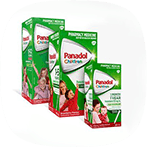
Panadol Childrens - Liquid
Children’s Panadol Colourfree Liquid (1 Month – 1 Year)
Children’s Panadol Elixir (5 Years – 12 Years)
Panadol Childrens – Suspension
Children’s Panadol Colourfree Suspension (1 Year- 5 Years)
Children’s Panadol Colourfree Suspension (5 Years – 12 Years)
Panadol Childrens – Suppositories
Children’s Panadol Suppositories (6 Months – 5 Years)
Children’s Panadol Suppositories (5 Years – 12 Years)
Panadol Childrens – Chewable


Here’s how to choose the right dose for your child

Discover Common Childhood Symptoms

Children's Symptoms
- Fever in Children

Children's Symptoms
- Baby Fever

Children's Symptoms
- Teething

Children's Symptoms
- Mild to Moderate Pain

ALL Panadol products contain Paracetemol.
Always read the label and follow the directions for use. Incorrect use could be harmful.
Panadol Osteo: Ask your pharmacist about this product. Incorrect use could be harmful.
Trademarks are owned or licensed to the Haleon Group of Companies. ©2023 Haleon. All Rights Reserved.
This website is operated by Haleon Australia Pty Ltd ABN 68 603 610 292, with its registered office at Level 48, 10 Darcy Street, Parramatta NSW 2150 The content of this site is intended for Australian audiences only.
Panadol and Optizorb are trademarks of the Haleon Group of Companies.
PM-AU-PAN-22-00139, PM-AU-PAN-22-00140, PM-AU-PAN-22-00141, PM-AU-PAN-22-00228, PM-AU-PAN-22-00144, PM-AU-PAN-22-00146, PM-AU-PAN-23-00328, PM-AU-PAN-24-00087
PM-AU-PANCH-23-00023, PM-AU-PANCH-23-00024, PM-AU-PANCH-23-00011, PM-AU-PANCH-23-00028, PM-AU-PANCH-23-00001, PM-AU-PANCH-23-00002, PM-AU-PANCH-22-00047, PM-AU-PAN-23-00373


